
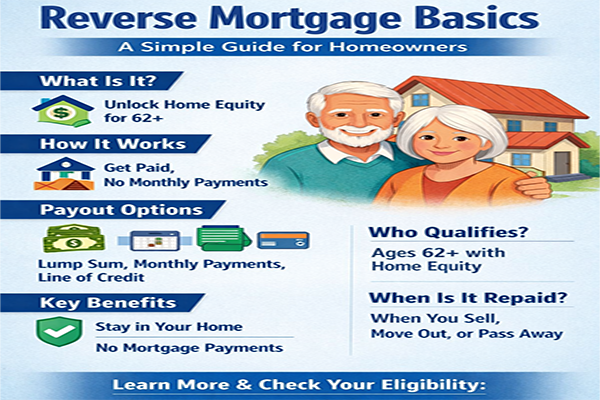
A reverse mortgage can be a powerful financial tool—but only if you understand how it works. This guide breaks down the basics in a clear, easy-to-understand way so you can confidently decide whether it fits your needs.
What Is a Reverse Mortgage?
A reverse mortgage is a loan that allows homeowners aged 62 and older to convert part of their home equity into cash—without selling their home or making monthly mortgage payments.
Instead of paying a lender each month, the lender pays you.
How a Reverse Mortgage Works
With a reverse mortgage:
- You borrow against your home’s equity
- You receive funds (lump sum, monthly payments, or line of credit)
- No monthly mortgage payments are required
- Interest accrues over time
- The loan is repaid when the home is sold or no longer your primary residence
Types of Reverse Mortgage Payout Options
Understanding how you receive your funds is key:
Lump Sum
Receive all funds at once (often used to pay off an existing mortgage).
Monthly Payments
Get consistent income to support your living expenses.
Line of Credit
Access funds as needed—and the unused portion can grow over time.
Combination
Mix of the above options for flexibility.
Basic Requirements
To qualify for a reverse mortgage, you generally must:
- Be 62 years or older
- Live in the home as your primary residence
- Have significant equity in the property
- Maintain the home and stay current on property taxes and insurance
What Happens to Your Home?
One of the most important things to understand:
- You keep ownership of your home
- The lender places a lien (just like a traditional mortgage)
- You can stay in your home as long as you meet loan obligations
When Does the Loan Get Repaid?
A reverse mortgage becomes due when:
- The home is sold
- The borrower moves out permanently
- The borrower passes away
At that point:
- The home can be sold to repay the loan
- Heirs can keep the home by paying off the balance
- Any remaining equity belongs to you or your estate
Costs to Be Aware Of
Like any mortgage, there are costs involved:
- Closing costs
- Mortgage insurance (for FHA-insured loans)
- Interest that accrues over time
- Servicing fees (in some cases)
These costs are typically financed into the loan rather than paid out-of-pocket.
Benefits of a Reverse Mortgage
✔ No Monthly Mortgage Payments
Free up cash flow immediately.
✔ Stay in Your Home
Age in place without selling.
✔ Flexible Access to Cash
Choose how and when to receive funds.
✔ Non-Recourse Protection
You or your heirs will never owe more than the home’s value.
Things to Consider
A reverse mortgage isn’t for everyone. Consider:
- It reduces your home equity over time
- It may impact inheritance plans
- You must continue paying taxes, insurance, and maintenance
Talking with a qualified professional is key before making a decision.
Explore Your Options
If you’re curious whether a reverse mortgage fits your situation, the best next step is to run the numbers.
👉 Access the Reverse Mortgage Portal here:
Inside the portal, you can:
- See if you may qualify
- Estimate available funds
- Align the program with your financial goals
Reverse Mortgage Guide: Turning Misconceptions into Smart Financial Strategy
Final Thoughts
A reverse mortgage is not just a loan—it’s a financial strategy.
When used correctly, it can:
- Improve cash flow
- Reduce financial stress
- Support a more comfortable retirement
Understanding the basics is the first step toward making a confident, informed decision.


[…] Reverse Mortgage Basics: A Simple Guide for Homeowners […]
[…] Reverse Mortgage Basics: A Simple Guide for Homeowners […]