
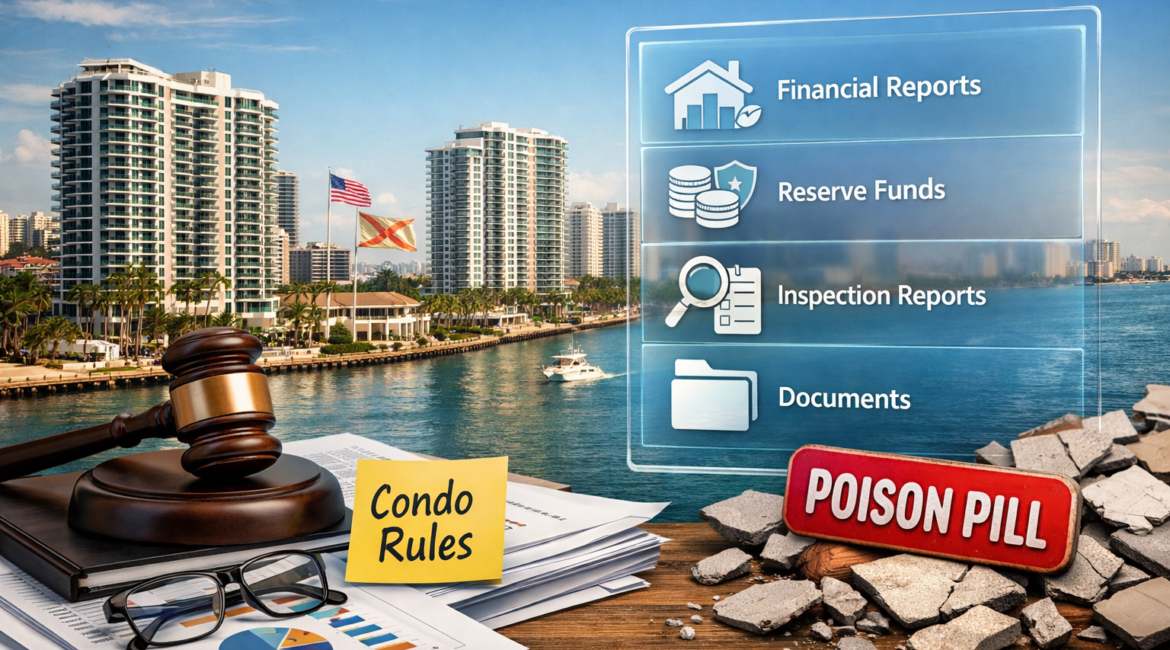
In early 2026, Florida’s condominium market experienced meaningful changes that are altering how buyers, owners, associations and developers operate — particularly in older buildings.
New Transparency Requirements
A new state law now requires condominium associations with 25 or more units to host certain key documents on secure, online platforms. This gives prospective purchasers easy access to financial information — including reserve funds, operating budgets and building reports — before making offers.
Real estate professionals say these digital disclosure portals are reducing uncertainty for buyers. With access to more complete information upfront, condos that are financially sound and well-maintained tend to attract more interest, while properties facing reserve shortfalls or structural concerns are being negotiated more realistically.
Shifting Buyer Confidence
According to agents working in South Florida markets, confidence among buyers has grown compared with last year. After the devastating collapse of a Miami condo building in 2021 shook buyer trust nationwide, many older communities saw fewer sales as uncertainty over repairs and reserve funding lingered.
But now, with more transparency and clearer expectations around building finances and safety, some experts believe the market is stabilizing. This has led to renewed buyer interest, particularly in buildings that have already addressed major issues or funded their reserves responsibly.
Legal Ruling and the “Poison Pill”
Another major development in Florida involves a recent court decision that impacts how redevelopment and buyouts can proceed in older condo buildings.
Under this ruling, if the original condo documents require unanimous consent for certain changes, even a small minority of owners can block large-scale projects. This scenario — sometimes called a “poison pill” — makes it harder for developers to pursue buyouts or conversions in buildings that lack supermajority approval thresholds.
For developers targeting older waterfront condominiums, this adds an extra layer of risk and uncertainty. Some are responding by focusing their efforts on buildings with bylaws that allow redevelopment with lower consent thresholds.
Market Impact and Outlook
Real estate professionals say these combined changes — greater document transparency and court protections for owners — are reshaping the dynamics between condo owners, buyers, and developers.
Buyers benefit from better insight into building health and finances, while owners in buildings with robust reserves gain a competitive edge. Developers, on the other hand, must now factor in newfound legal obstacles and greater scrutiny before pursuing expensive projects.
Overall, these shifts are seen by many in the industry as steps toward a more stable and informed condominium market in Florida — one where transparency and owner protections drive more confident decision-making.